The Weekend Reset That Tries to Do Too Much
A weekend reset can feel lighter when you choose one contained household task, define its finish line, and leave recovery time unassigned.

A weekend reset works better when it has one clear finish line, not a list that consumes both days. If your weekend reset starts with laundry, errands, meal prep, and a vague promise to “get the house together,” it can turn rest into another shift. Pick one contained task instead, then leave the rest of your available time unassigned.
A reset is a boundary, not a household overhaul
The phrase “catch up” sounds practical, but it has no natural endpoint. There is always another cupboard to sort, surface to wipe, or errand to add. A useful reset is narrower: it addresses one friction point that is making the coming week harder.
That might mean clearing the kitchen counter where mail and groceries collide, preparing a batch of soup, or returning borrowed items to one neighbor. The task should be specific enough that you can tell when it is finished. “Make the kitchen better” is open-ended; “clear the counter beside the toaster” has a visible boundary.
This limit matters because household work expands to fill the time you offer it. Once a counter is clear, you may notice a drawer that needs sorting. That does not make the drawer part of the reset. It makes it a possible task for another day.
Choose the task by the friction it removes
Start with a small question: What repeated annoyance could one task reduce? Look for a snag that appears during ordinary routines, rather than choosing the mess that looks most dramatic.
- If breakfast feels cramped, clear the spot where the kettle or toaster sits.
- If dinners stall while you search for ingredients, group the foods you already plan to use on one refrigerator shelf.
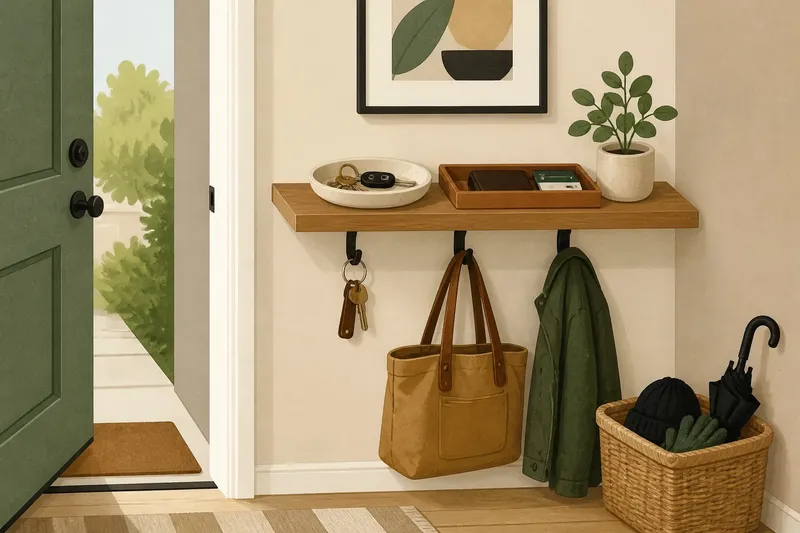
- If a shared entry table collects odds and ends, return only the items that belong elsewhere.
- If the recycling keeps overflowing, take the existing bin out and replace its liner if needed.
These are modest jobs, but they change the next encounter with the space. Avoid combining them into a “while I’m here” sequence. The point is not to squeeze every possible benefit from one burst of effort; it is to solve one clearly chosen nuisance without borrowing the whole weekend.
Give the job a finish line and a stopping point
Define the result before you begin. A useful finish line describes what will be different, not every action you might take. For instance: “The kitchen table will be clear enough for two people to eat.” That leaves room to put away the obvious clutter without demanding that you reorganize the entire dining area.
Say you have a stack of clean towels on a chair and the bathroom shelf is awkward to reach. You might choose to fold the towels and place them on the shelf, with the finish line being an open chair and towels stored where they are used. If you then spot an untidy cabinet, leave it for a separate decision. The visible result is complete; the cabinet is not an invitation to expand the job.
Set a stopping point that fits your energy and the task, then stop when either the finish line or that boundary arrives. If you discover that the task is larger than expected, narrow it. Clear one section of the table rather than sorting every paper on it. A smaller completed job is more useful than a sprawling one abandoned halfway through.
Why should recovery time stay unassigned?
Does unassigned time mean doing nothing?
No. It means you have not promised that time to another household task. You can nap, take a walk, see a friend, or decide later; the value is keeping choice open.
What if several chores feel urgent?
Choose the one that removes the most immediate friction, then make a brief note of the others for another planning moment. If something affects health, safety, or an essential household need, handle that need appropriately rather than treating it as optional reset work.
Can a shared household choose the task together?
Yes, provided the decision stays small and clear. Ask each person to name one recurring annoyance, agree on a single task, and make sure the person doing it understands what “finished” means.
What if the task takes less time than expected?
Let it be done. You do not need to fill the remaining space with another chore just because you had set aside time for a reset.
Leave room for the weekend you actually have
An open block of time is not wasted simply because it has no household label. Weekends include changing plans, low-energy mornings, weather, visitors, and the desire to sit with coffee without turning it into a productivity exercise. An unassigned stretch gives those ordinary needs somewhere to fit.
This does not require elaborate scheduling. Decide what you are willing to do, keep the task within that boundary, and avoid treating spare time as evidence that more work should be added. The most tempting extra job is often the one that can wait without changing the week in a meaningful way.
It is not worth making a color-coded weekend plan or timing every chore to prove the reset was efficient. A scrap of paper with one task written on it is enough. If the task needs special supplies, check the relevant label or manufacturer’s directions before using them; otherwise, keep the setup simple and familiar.
A small reset can make the next day easier
The point of a weekend reset is not to arrive at Monday with a spotless home. It is to remove one obstacle, then let the rest of the weekend remain yours. A clear counter, a usable table, or a prepared meal can help without turning rest into a reward you have to earn.
For a weekend reset, choose the task that will make one ordinary moment easier, define what done looks like, and protect the time you have not assigned. When the chosen job is complete, let it stay complete. The next useful household task can wait until you choose it.