Why a Doorway Drop Zone Works
A doorway drop zone gives keys, bags, and daily essentials one reliable stopping place, so you spend less time searching when it is time to leave.
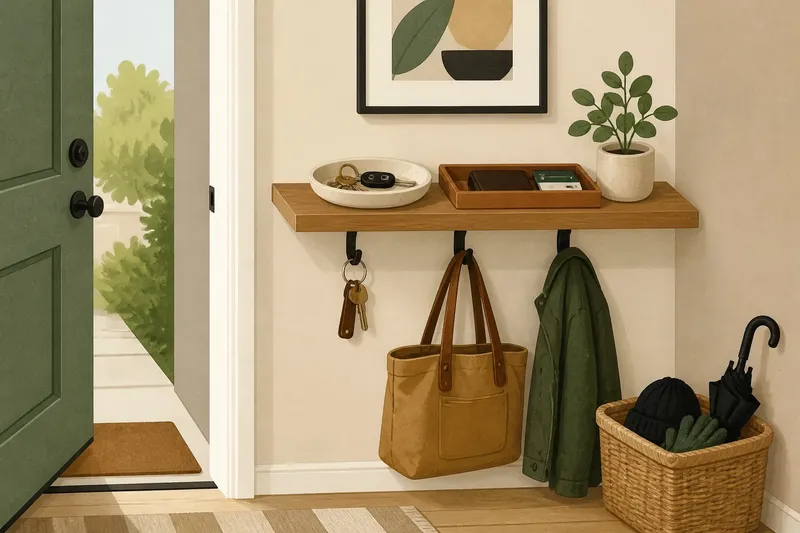
A doorway drop zone works because it gives everyday carry items a consistent stopping place before they vanish into the house. If your keys land on the kitchen counter one day and in a coat pocket the next, a small spot near the door can break that search cycle without adding a complicated routine.
A doorway drop zone turns arrival into a cue
People tend to put things down where their hands are free. At the door, that might mean keys on a windowsill, a bag on the nearest chair, or sunglasses in a coat pocket. Each choice makes sense in the moment; together, they scatter the objects you need to leave again.
A defined landing spot gives the arrival moment a simple cue: these items go here. The cue matters more than matching containers or a polished look. A shallow tray, a sturdy hook, or a small shelf can be enough if it sits where you naturally pause to take off a coat or set down a bag.
The best location is not always immediately beside the door. Notice your actual path inside. If the door opens onto a narrow passage, a shelf just beyond the swing may be easier to reach and less likely to catch a sleeve. Keep the spot visible from the entry, and avoid placing it where a door, stroller, or frequently used chair blocks access.
Choose a home for the things that travel
Start with the items that regularly leave the house and commonly trigger a search. For many households, that means keys, a wallet, transit card, sunglasses, and a bag. Add only what belongs to your own routine; a dog leash may be essential in one home and clutter in another.
Give each item a place that suits its shape and handling. A hook keeps a frequently used bag off the floor. A small dish contains loose keys without requiring careful placement. A narrow basket can hold gloves, but it can also swallow receipts and spare objects if nobody knows its purpose.
- Keys: Use a hook or a shallow dish that is easy to reach while carrying bags.
- Wallet or transit card: Reserve a small tray section or a specific pocket in a bag that stays by the entry.
- Everyday bag: Choose a sturdy hook or a clear patch of shelf, rather than a spot that blocks the walkway.
- Sunglasses: Use a small dish or case so they do not get buried beneath other items.
- Weather gear: Keep a compact basket for the gloves, hat, or umbrella that is currently in use.
These are options, not a shopping list. An empty cereal bowl may already work as a key dish, and an existing coat hook may be all the hardware you need. What matters is that the place is obvious and convenient enough to use without a second thought.
Let the space fit the doorway
In a narrow entry, a wall-mounted hook or a small ledge can preserve floor space. In a shared hallway, keep belongings within your home’s footprint rather than letting bags spill into the path. A roomy foyer can hold a bench or cabinet, but the landing spot should still be easy to see and reach.
Think about the surface beneath the drop zone, too. Keys can scratch a painted shelf; a simple felt pad or small tray contains them. Damp umbrellas need a place suited to wet items, not a pile of mail or fabric bags. The aim is a useful stopping place, not a new display that needs constant fussing.
It is not worth arranging decorative jars, labels, and matching baskets before you know what the household actually drops there. Start with what you own. If an item repeatedly lands outside the chosen spot, that is useful information: the location, container, or assigned item may not fit the real movement through the doorway.
Make the drop zone work for more than one person
Shared spaces need a little clarity. If two people use the same entry, a single crowded bowl may make it hard to tell whose keys are whose. Separate hooks or distinct tray sections can make the arrangement legible without turning the wall into a naming system.
Children may need a lower hook, while someone carrying a work bag may need a sturdier one. Keep frequently used items at comfortable reach, and avoid assigning the most convenient spot to something rarely used. A household arrangement succeeds when each person can put an item away while arriving with full hands.
Say you share a small apartment entry and keep searching for one set of keys. Imagine setting a shallow dish on the shelf directly inside the door and reserving one hook for the daily bag. The expected observable change is simple: after coming home, those keys and that bag have a visible place to land, so the next departure no longer begins with checking several rooms.
What should a doorway drop zone hold?
Should mail go in the drop zone?
Only if you can give incoming mail a separate, clearly limited place. Mixing envelopes with keys can hide the small objects the landing spot is meant to keep visible.
What if the entry has no shelf?
A wall hook, a small wall-mounted pocket, or a tray on a nearby stable surface can serve the same purpose. Choose a spot that does not obstruct the doorway or shared passage.
How do you keep the drop zone from becoming cluttered?
Limit it to items that regularly travel, and remove objects that have settled there without a clear role. If the container is always overflowing, make it smaller or give occasional items a different home.
Should every household member have a separate spot?
Not necessarily. Separate hooks or tray sections help when belongings get confused; a shared dish may be enough when everyone uses a small number of items and can identify them easily.
Adjust the setup when real use disagrees
Once the landing spot is in place, pay attention to where items actually end up. A wallet that keeps returning to a coat pocket may be easier to leave there than to transfer to a tray. A bag that gets hung on a chair may need a lower hook or more clearance around its current one.
Keep the useful parts and change only what creates friction. A doorway drop zone is not a rule about how a home should look; it is a small agreement between an item and the place you naturally reach when you come in. When keys, bags, and other daily essentials have an easy, visible stop, finding them can take less attention—and the doorway stays ready for the next trip out.